
.svg)

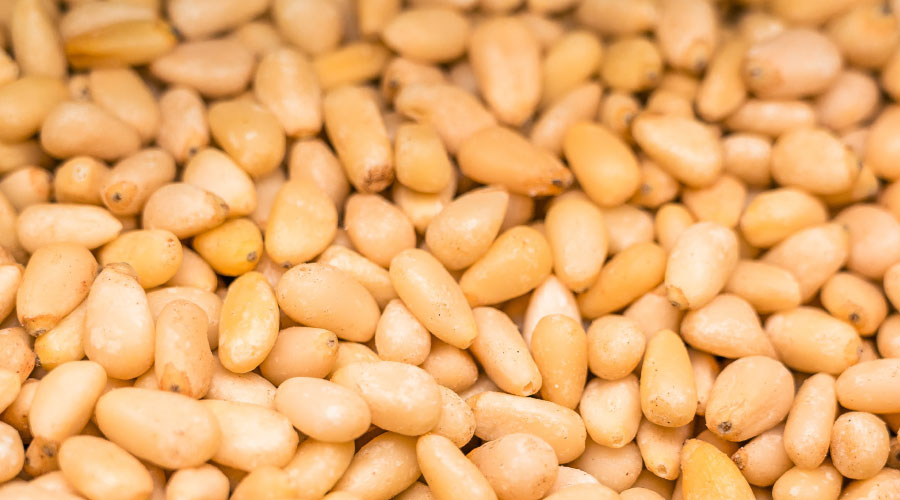
The "caviar of nuts," pine nuts are the labour-intensively harvested edible seeds of pine species and one of the most expensive nuts in the world, central to dishes from Italian pesto to Middle Eastern rice dishes.
They provide healthy fats, protein, magnesium, zinc and vitamin E. Demand is steady and premium-led, supported by growing interest in Mediterranean and plant-forward cuisine. Most supply comes from the Asian species grown or wild-harvested in China, Russia (Siberia), North Korea, Pakistan and Afghanistan, while the Mediterranean stone pine supplies a smaller, high-value market from Italy, Spain, Portugal and Turkey. Global production is relatively small and highly variable, typically in the range of 35,000 to 50,000 tonnes (kernel basis), because it relies heavily on natural forests and irregular harvest cycles.
Quick Facts
- Often called the "caviar of nuts" due to their high price and labour-intensive harvest
- Seeds need around 18 months to mature inside the pine cone after removal
- Most supply comes from natural/wild forests rather than orchards
- Leading origins: China, Russia (Siberia), North Korea, Pakistan, Afghanistan
- The Mediterranean stone pine (Italy, Spain, Portugal, Turkey) supplies a separate premium niche
- Global production: approx. 35,000–50,000 tonnes (kernel basis) — small and highly variable
- Can trigger "pine mouth," a temporary metallic taste disturbance linked to certain species
- Central to dishes such as Italian pesto and Middle Eastern rice and meat dishes
Checkout our latest product


.svg)
