
.svg)

Cashew Nuts
Native to Brazil but now grown across the tropics, the cashew is one of the world's most popular snacking nuts and a key ingredient in plant-based dairy alternatives.
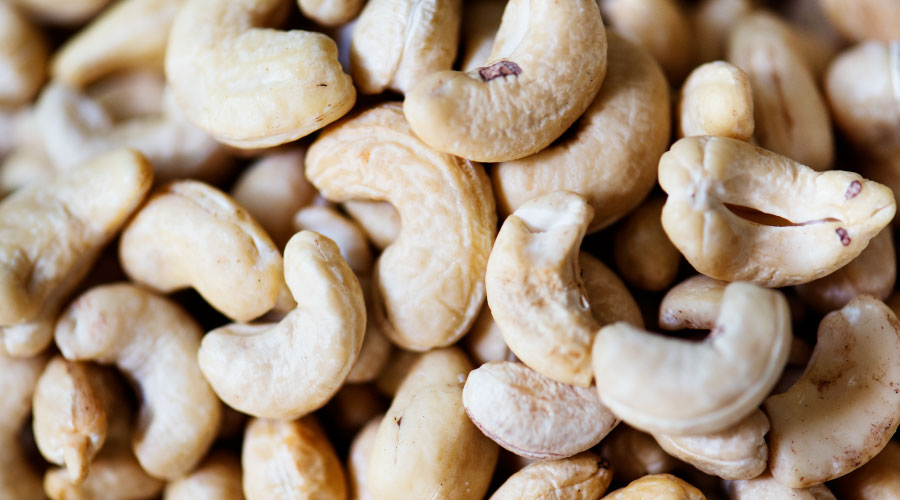
Native to Brazil but now grown across the tropics, the cashew is one of the world's most popular snacking nuts and a key ingredient in plant-based dairy alternatives.
It offers protein, healthy fats, magnesium, copper and zinc. Demand has grown strongly, helped by the rise of cashew-based milks, cheeses and creams. Côte d'Ivoire is the largest grower of raw nuts (over a million tonnes), followed by India, Vietnam, Benin, Tanzania and the fast-rising Cambodia, with Africa now supplying the majority of the raw crop, much of which is shipped to India and Vietnam, the world's leading processing and kernel-export hubs. Global raw production is approximately 4 to 4.5 million tonnes (in-shell), on a steady long-term growth path.
Quick Facts
- Native to Brazil, but now grown predominantly in West Africa and Southeast Asia
- Côte d'Ivoire produces over 1 million tonnes a year — the world's largest grower of raw nuts
- Africa supplies the majority of the raw crop, but most processing happens in India and Vietnam
- The cashew shell contains a caustic oil, making shelling a hazardous, specialised process
- Leading origins: Côte d'Ivoire, India, Vietnam, Benin, Tanzania, Cambodia
- Global raw production: approx. 4–4.5 million tonnes (in-shell)
- A key ingredient driving growth in plant-based milks, cheeses and creams
- Vietnam is the world's leading exporter of processed cashew kernels
Checkout our latest product
At Cabira, we combine global thinking with local knowledge.
Get in touch


.svg)
