
.svg)

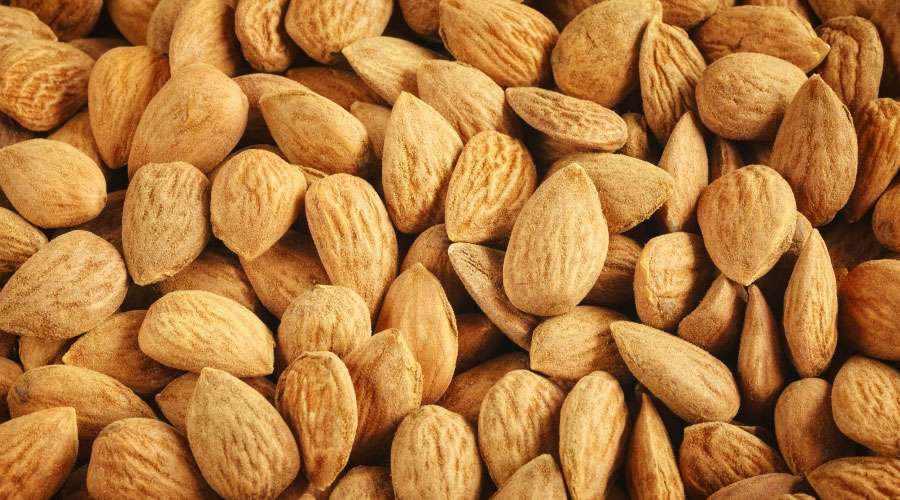
The almond is the world's most widely consumed tree nut and one of its most versatile, eaten raw or roasted and processed into milks, flours, butters and pastes.
It is rich in vitamin E, magnesium, protein and monounsaturated fats, a profile that has made it central to the plant-based and "better-for-you" food movements. That positioning continues to drive solid demand growth, particularly for almond milk and other dairy alternatives, with the global market expanding at a mid-single-digit annual rate. The United States, specifically California, dominates production with roughly three-quarters to four-fifths of global supply, followed by Spain, Australia, Iran, Turkey and Morocco. Global production recently reached around 1.5–1.6 million tonnes (kernel basis) and has grown substantially over the past decade.
Quick Facts
- The world's most widely consumed tree nut
- Botanically a member of the same family as peaches, cherries and plums (a "drupe," not a true nut)
- California alone supplies roughly 75–80% of global production
- Leading origins: United States, Spain, Australia, Iran, Turkey, Morocco
- Global production: approx. 1.5–1.6 million tonnes (kernel basis)
- A single almond orchard acre in California can require over 1 million gallons of water a year
- Central to the rise of almond milk and other dairy alternatives
- Global market value forecast to grow from around $10 billion to over $13 billion by the end of the decade
Checkout our latest product



.svg)
