.svg)

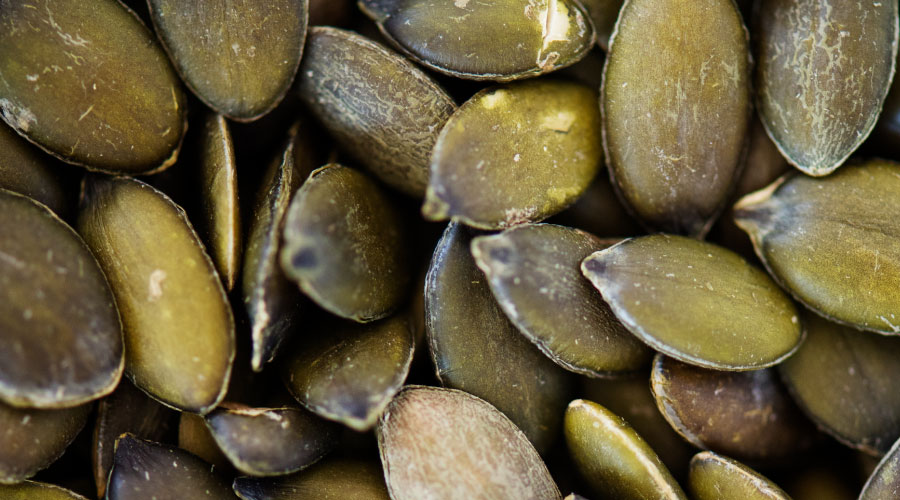
Harvested from pumpkins and squash, including the prized hull-less "Styrian" varieties used for oil, pumpkin seeds (pepitas) have become a staple of the healthy-snacking and seed-based food trend.
They are nutrient-dense, offering plant protein, magnesium, zinc, iron and healthy fats, and are popular in trail mixes, bakery, granola and as a standalone snack. Demand is growing steadily alongside consumer interest in seeds as a convenient, nutritious snack and topping. China is the leading global producer, with significant volumes also from India, Russia, Ukraine, Mexico and the United States, while hull-less oil-seed types are associated with Austria, Slovenia and Eastern Europe. Production tracks the wider pumpkin and squash crop and continues to expand as snacking demand grows.
Quick Facts
- Also known as pepitas, particularly the hull-less varieties
- Hull-less "Styrian" pumpkin seeds, prized for oil, originate from Austria and Slovenia
- One of the richest plant sources of magnesium and zinc
- Leading origins: China, India, Russia, Ukraine, Mexico, United States
- Production volume tracks the wider global pumpkin and squash crop
- Increasingly used in trail mixes, granola, bakery and as a standalone protein-rich snack
- Demand is growing steadily with consumer interest in functional, nutrient-dense seeds
- Roasted pumpkin seed oil is a prized, dark-green gourmet product in parts of Central Europe
Checkout our latest product


.svg)
