.svg)

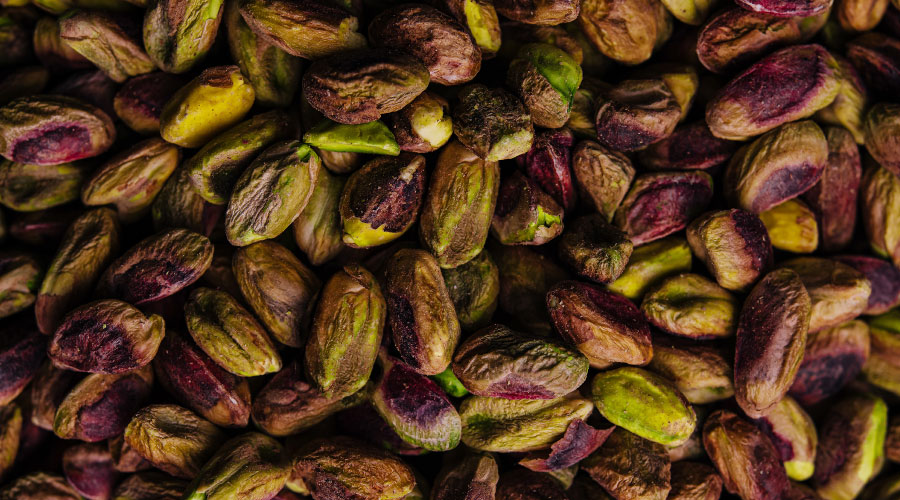
With origins in Iran and Central Asia and a history stretching back thousands of years, the pistachio has become a premium snacking and confectionery nut, currently enjoying exceptional consumer momentum thanks to trends such as pistachio-flavoured chocolate and desserts.
It is rich in protein, fibre, potassium and antioxidants, and is among the lower-calorie tree nuts per serving. Demand has surged in recent years, with strong growth in China, the Middle East, India and Europe. Production is concentrated in the United States (California), Iran and Turkey, which together account for around 85–90% of global supply, with smaller volumes from Syria, Spain and Italy. Global production is approximately 1.2–1.4 million tonnes (in-shell), though the crop alternates between "on" and "off" years, creating meaningful season-to-season swings.
Quick Facts
- Native to Iran and Central Asia, with edible-seed evidence dating back to 6750 BCE
- Trees are dioecious, separate male and female trees are needed for pollination
- Crops alternate between "on" and "off" years, with output swinging by 20%+ season to season
- Leading origins: United States (California), Iran, Turkey
- Top three producers supply around 85–90% of global output
- Global production: approx. 1.2–1.4 million tonnes (in-shell)
- One of the lower-calorie tree nuts per serving, supporting its "better-for-you" snacking positioning
- Demand has surged recently, fuelled by pistachio-flavoured chocolate and dessert trends
Checkout our latest product


.svg)
