
.svg)

Peanuts
Botanically a legume rather than a true tree nut, the peanut (or groundnut) is one of the world's most important and affordable sources of plant protein and edible oil.
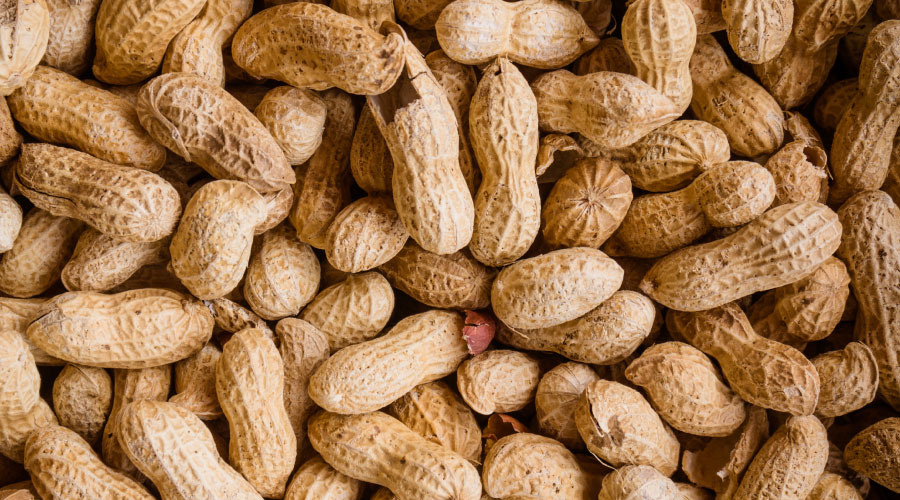
Botanically a legume rather than a true tree nut, the peanut (or groundnut) is one of the world's most important and affordable sources of plant protein and edible oil.
It delivers protein, healthy fats and underpins everything from peanut butter and confectionery to cooking oil and animal feed. Demand continues to rise on the back of the global shift toward plant-based protein and high-protein snacking. China is by far the largest producer at roughly 18–19 million tonnes a year, followed by India, Nigeria, the United States, Sudan and Senegal, with significant output across West Africa and the Americas. Global production stands at approximately 50 million tonnes annually and is on a long-term upward trend.
Quick Facts
- Botanically a legume, not a tree nut — grows underground after the flower buries itself to develop the pod
- Native to South America; spread globally via colonial-era trade routes
- China produces roughly 18–19 million tonnes a year — over a third of world supply
- Leading origins: China, India, Nigeria, United States, Sudan, Senegal
- Global production: approx. 50 million tonnes annually
- One of the world's most important sources of vegetable (cooking) oil
- Around 90% of the US population consumes peanut butter
- Demand is rising on the back of plant-based protein and high-protein snacking trends
Checkout our latest product

At Cabira, we combine global thinking with local knowledge.
Get in touch


.svg)
