
.svg)

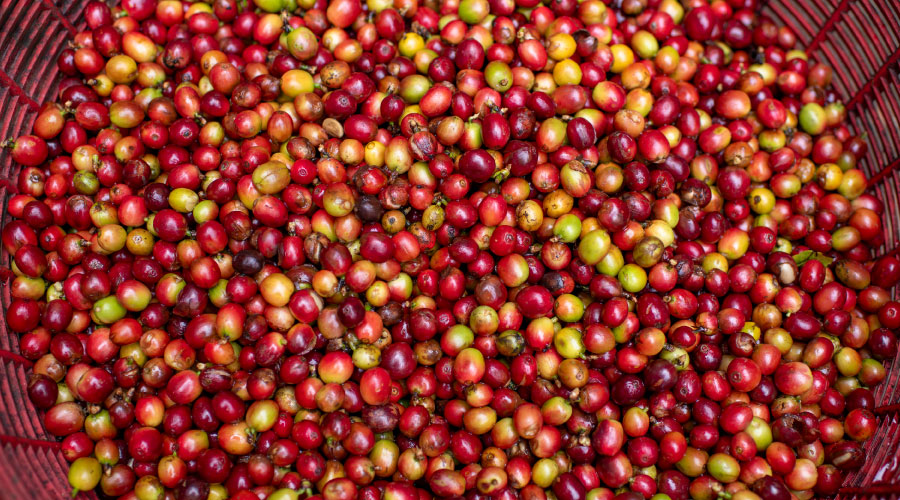
One of the world's most traded agricultural commodities, coffee is produced across the tropical "coffee belt" in two principal species, Arabica, prized for flavour, and the heartier, more caffeine-rich Robusta.
Beyond its role as the world's favourite caffeinated beverage, coffee is a meaningful source of antioxidants. Demand continues to grow globally, with strong momentum in specialty, cold and ready-to-drink formats and in emerging consumer markets. Brazil is the dominant producer at around 35–38% of global supply (and the leading Arabica origin), followed by Vietnam (the Robusta powerhouse) and Colombia, with Indonesia, Ethiopia, Honduras, Uganda and India also important. Global production is approximately 176 million 60-kilogram bags per year, roughly 10.5 million tonnes, with the market currently characterised by tight supply and consumption running close to or ahead of output.
Quick Facts
- Grown across the tropical "coffee belt" in two principal species: Arabica and Robusta
- Brazil alone supplies around 35–38% of the entire world crop
- Brazil and Vietnam together account for more than half of global production
- Leading origins: Brazil, Vietnam, Colombia, Indonesia, Ethiopia
- Global production: approx. 176 million 60kg bags annually (around 10.5 million tonnes)
- The world drinks an estimated 2.25 billion cups of coffee every day
- Colombia is one of the few major producers growing exclusively Arabica
- Global consumption is currently running close to or ahead of supply, keeping the market tight
Checkout our latest product


.svg)
