
.svg)

Sesame Seeds
One of the oldest oilseed crops in cultivation, domesticated well over 3,000 years ago.
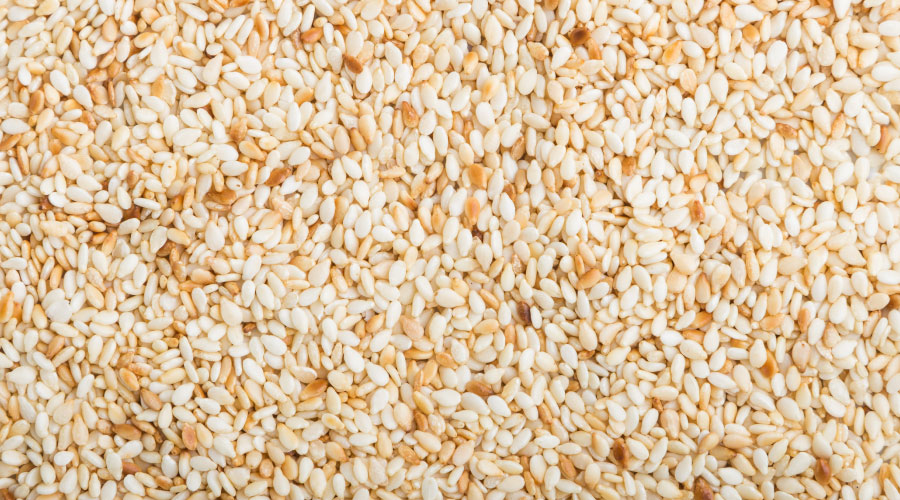
One of the oldest oilseed crops in cultivation, domesticated well over 3,000 years ago, sesame is valued for its high oil content and rich, nutty flavour, appearing across cuisines as whole seed, oil, tahini and halva.
It is a good source of healthy fats, protein, calcium, iron and magnesium. Demand is rising on the back of growth in plant-based diets, bakery and confectionery applications, and the global tahini and snacking categories. Sudan, India and Myanmar are the leading producers, together accounting for around 44% of global supply, with China, Nigeria, Tanzania, Brazil and Burkina Faso also significant. Global production is approximately 6.7 million tonnes annually.
Quick Facts
- One of the oldest oilseed crops in the world, domesticated over 3,000 years ago
- Has one of the highest oil contents of any seed — around 50%
- Leading origins: Sudan, India, Myanmar
- Top three producers account for around 44% of global supply
- Global production: approx. 6.7 million tonnes annually
- Japan is the world's largest sesame importer, central to traditional Japanese cooking
- Available in white and darker (black) varieties, with black seeds favoured in China and Southeast Asia
- Sudan exports over 80% of its crop, mainly to China, Japan and Europe
Checkout our latest product

At Cabira, we combine global thinking with local knowledge.
Get in touch


.svg)
