
.svg)

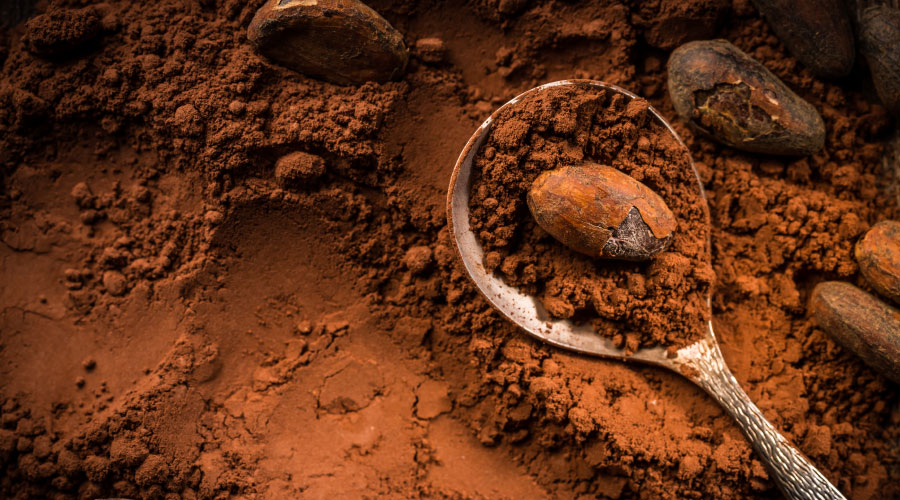
The foundation of the global chocolate and confectionery industry, cocoa is grown in a narrow tropical belt and remains one of the world's most economically and culturally important crops.
Cocoa is a notable source of flavanol antioxidants, magnesium and iron, and its fats (cocoa butter) are valued in both food and cosmetics. Long-term demand is driven by steady global growth in chocolate and confectionery. Côte d'Ivoire and Ghana dominate, together supplying roughly 60% of the world crop, followed by Ecuador (the leading fine-flavour origin), Indonesia, Cameroon, Nigeria and Brazil. Global production is approximately 4.4 to 5 million tonnes per year; supply is closely watched, as weather, ageing trees and disease in West Africa can tighten the market and move prices sharply.
Quick Facts
- Grown only in a narrow tropical belt roughly 20° north and south of the equator
- Côte d'Ivoire and Ghana together supply around 60% of the entire world crop
- Leading origins: Côte d'Ivoire, Ghana, Ecuador, Indonesia, Cameroon, Nigeria
- Global production: approx. 4.4–5 million tonnes per year
- Ecuador is recognised as the leading source of fine-flavour, premium cocoa
- Cocoa prices hit an all-time high of nearly $13,000 per tonne in December 2024
- Cocoa butter is a valued ingredient in both food and cosmetics
- An estimated 90% of cocoa farms worldwide are small, family-run operations
Checkout our latest product


.svg)
